

Iran: “Unconditional Surrender” This is Not
By Michael M. Yell, Feature Writer and Editor at The Union


So, how’s that surrender going?
By the time that the first missiles sped toward Iran, the White House had given a number of rationales for the war to come. The rationales included the threat of nuclear weapons, preemption against an imminent Iranian attack, protecting Iranian protesters (“help is on the way“ by now is a total betrayal of the Iranian people), and bringing about regime change. By the time missiles were in the air, the stated rationale had already shifted a number of times. America was now fighting a war sold on a shifting set of claims the government’s own intelligence never fully backed. Our military is performing the role it was assigned in this war, or “excursion,” in Iran well. The Trump Administration is not.
In addition to not settling on a reason, Trump did not go to the American people with an explanation. Instead, once the war began, he rose to the moment by addressing only those who follow him on his social media site Truth Social.
Through press gaggles, President Trump told Americans he was demanding Iran’s “unconditional surrender,” and that it was the only deal he would accept. So how is that going?
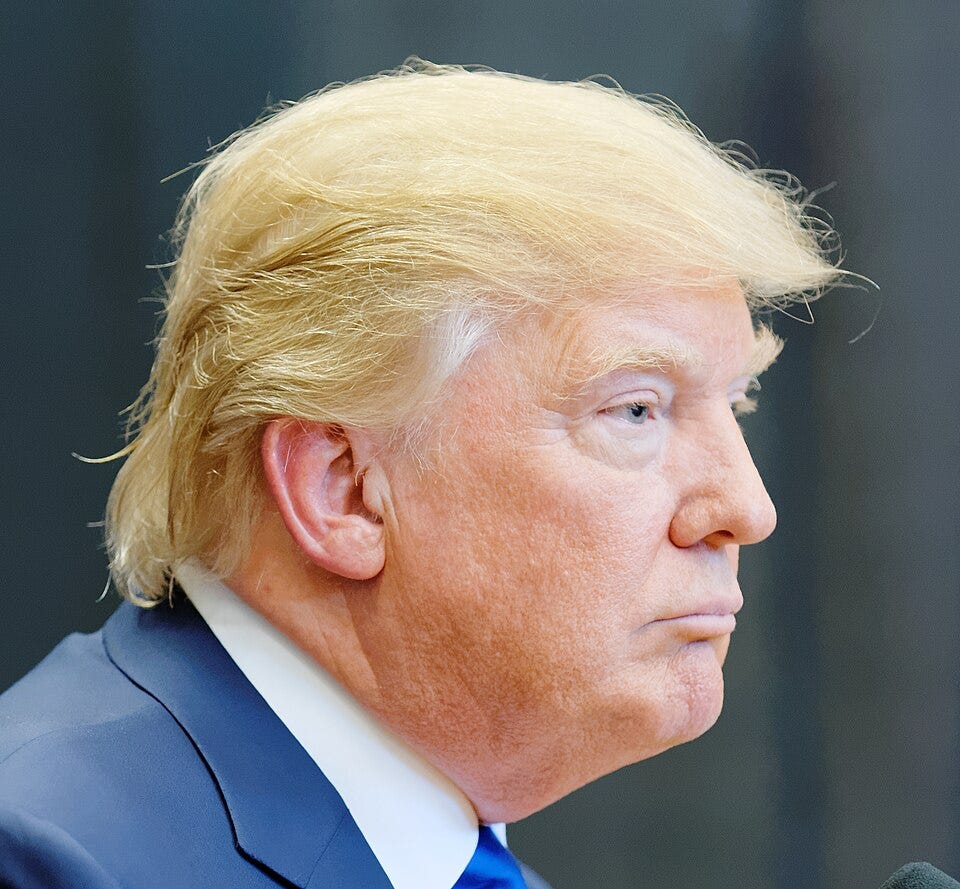
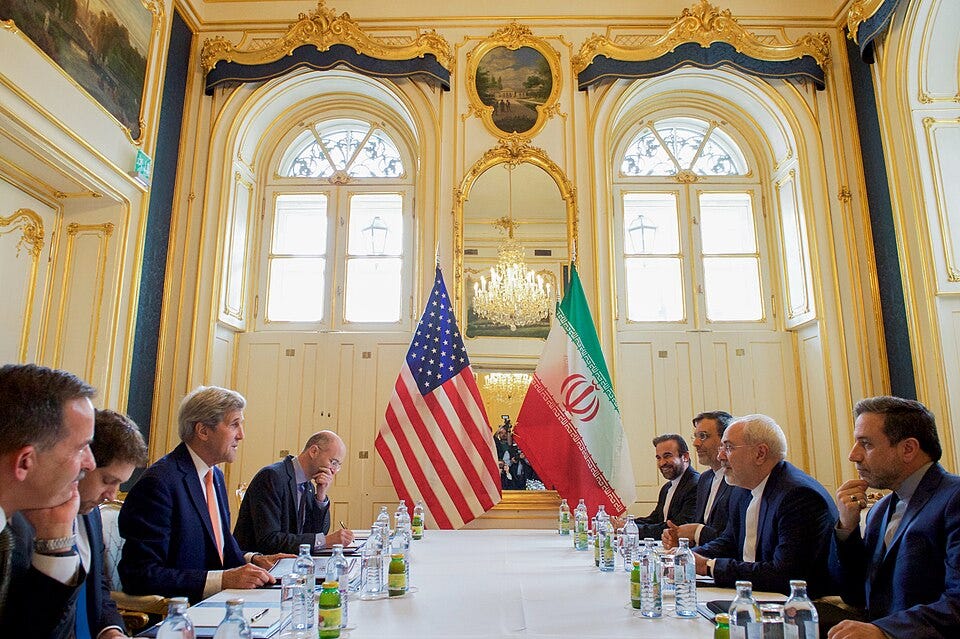
We’re a long way from “unconditional surrender.” We have been negotiating, with Oman, then Pakistan as intermediaries (there are no direct talks with Iran), since early in the war. Iran walked out June 1st, and there are no talks.
No talks, no deal in sight, and certainly no unconditional surrender. At best, we may stumble toward a severely watered-down version of the Joint Comprehensive Plan of Action (JCPOA), the 2015 agreement negotiated by the Obama administration with Iran, involving the UK, France, Russia, and China. More likely, we drift back to the prewar status quo, dressed up with vague assurances about nuclear activity. President Donald Trump will then declare an historic victory, “the greatest anybody has ever seen,” and move on. No end to the nuclear program, no end to state-sponsored terrorism, no relief for the Iranian people, and Iran’s persistent grip on the Strait of Hormuz.
How could the most powerful military in the world, backed (or perhaps led) by the most powerful military in the Middle East, Israel, end up with huge tactical wins yet checkmated by Iran?
When the “stable genius” met the Straits of Hormuz.
Trump reportedly ignored pre-war warnings that Iran would retaliate broadly against U.S. allies in the Middle East, U.S. military bases (20 have been hit, and this may have been done in coordination with Russian intelligence; something that Trump would never call out) and close the Strait of Hormuz. Instead, sources suggest he believed Iran would quickly go the way of Venezuela. Iran is not Venezuela. It is larger, more capable, and sits astride the shipping lane for roughly 20% of the world’s oil and a substantial share of global liquefied natural gas (LNG) . Venezuela could not mine a narrow international waterway and hold the global economy hostage from a chokepoint just miles wide.
From the start, Trump misunderstood the enemy. Did he think about what could go wrong; might they close the Strait, attack our military bases (recently satellite iews showed at least 20 attacks that did damage; including the one where six Americans were lost), attack other Gulf nations? It looks as if he was warned, but he dismissed all of those concerns. He also failed to grasp that Iran was not a regime that needed to win on the battlefield; it only needed to survive while imposing economic and military costs on others. Time is not a constraint on Iran but is a weapon for Iran. And now, with the strait constricted, Tehran holds a durable form of power: the ability to tax, restrict, and punish enemy nations and affect global commerce at will.
Iran’s strikes on refineries, LNG hubs, and export terminals, from Saudi Arabia to Qatar and the UAE, injected even more volatility into global supply. The Gulf states will be forced to accommodate Iran.
More economic pressure is being put on Iran with Trump’s counter blockade of the Straits. But with an ongoing inflation rate over 50%, and after having killed perhaps hundreds of thousands of Iranian protesters since 1980, is ratcheting up the inflation rate on the Iranian people even more really going to matter to its hardline regime? As conservative Robert Kagan has written,
A regime that could not be brought to its knees by five weeks of unrelenting military attack is unlikely to buckle in response to economic pressure….
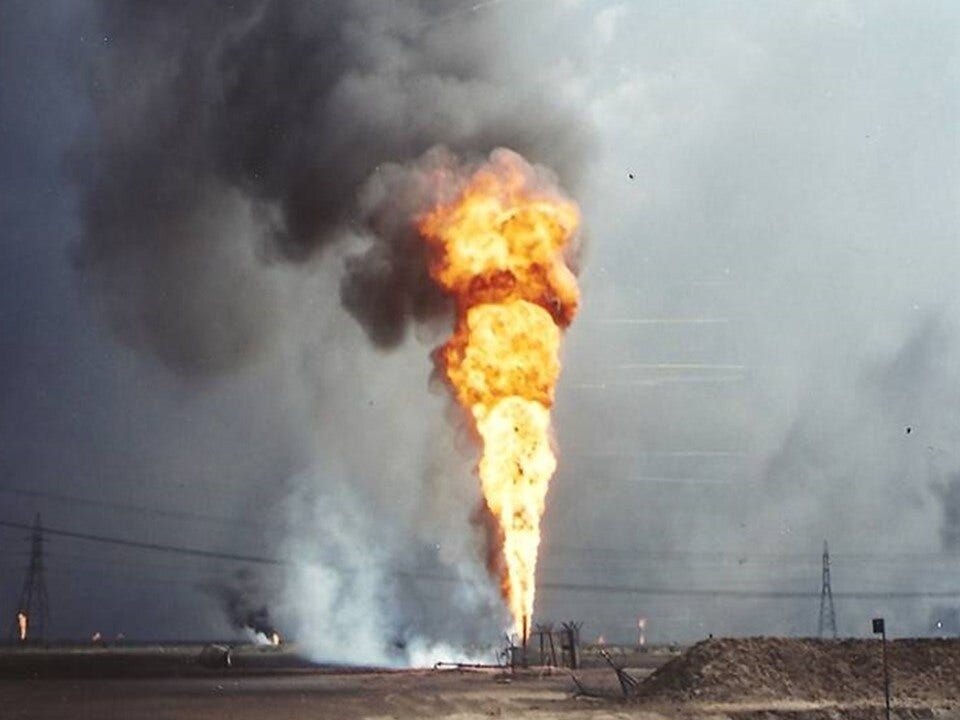
The moment Iran closed the Strait of Hormuz and began striking Gulf state oil processing facilities, oil prices spiked. Gas prices followed, and suddenly every American filling up their tank was paying the cost of a war they never voted for. The president who promised to bring prices down lit that match. Trump thought he was walking into a quick win, and misunderstood the economics of global oil prices, insisting that because the U.S. doesn’t get its oil through Hormuz it “doesn’t really affect us.” Oil is traded globally, so there is effectively a shared market price. When roughly 20 percent of the world’s supply is put at risk, it doesn’t stay overseas. It shows up at our pumps.
The tottering old man who cried wolf
President Trump apparently believed that his blustering and threats would be enough. Despie his continual threats, Trump blinked, TACOed, many times. His most demented threat came on Easter Sunday when he wrote on his social media site Truth Social
Tuesday will be Power Plant Day, and Bridge Day, all wrapped up in one, in Iran. There will be nothing like it!!! Open the Fu*kin’ Strait, you crazy ba*tards, or you’ll be living in Hell - JUST WATCH! Praise be to Allah.
Of course, nothing came of the threat. Since March 21, President Donald Trump has issued a rolling set of “or else” deadlines, each extended because, he said, “good and productive” conversations were ongoing and “Iran really wants a deal.” On March 21, 2026, he gave Iran 48 hours to reopen the Strait of Hormuz or face renewed strikes on energy infrastructure; within days, he extended that deadline. By late March, the ultimatum was again reset, pushed into early April, then extended again. Even after declaring a “final” deadline, enforcement dissolved into pauses, extensions, and stand-downs. The pattern is unmistakable: deadlines announced in absolute terms, then repeatedly revised. At what point does extreme rhetoric without follow-through stop being strategy and start being bluffs that erode American credibility?
Will Trump just claim victory and walk away?
With no end to the war in sight, and the costs to Americans, Trump has reportedly asked the U.S. intelligence community to assess the consequences of simply declaring victory and walking away. This may well be his play, but his MAGA base will surely proclaim it a triumph: “Trump has done it again.”
But we must step back and look at what he has really done. He triggered a global economic shock. Each threat paused has not projected strength; it has taught adversaries and allies to discount American resolve as Iran tightened its grip over the Strait of Hormuz.
On Tuesday, June 2, President Trump had, reportedly, an expletive-filled call with Israeli Prime Minister Netanyahu. In the call he stated that he would negotiate a letter of intent that would formally end the war in exchange for opening the Strait of Hormuz and discussing the Iranian nuclear program. That will get us back to the status quo prior to the war, and can be said, at the very least, to be walking away (Kagan termed it a surrender).
In the meantime, there are victims on every side of the ledger: the Iranian people still living under a regime many despise but cannot easily dislodge, the American public paying the hidden tax of war in higher prices for gas, food, and fertilizer, and the nations of the Gulf and those of East Asia, where nearly 80 percent of oil imports still flow through the Strait of Hormuz, are now held hostage to Iran.
And that is the final irony of Trump’s “excursion”: a poorly planned and run war reshaping the global order in ways that reward our rivals, burden our allies, and leave us paying the bill. Of the revolving door of rationales provided, have any of them been achieved? This is not what victory looks like. It is what strategic failure feels like.
About The Author
Michael Yell is a retired history teacher, former president of the National Council for Social Studies, and volunteer writer/editor at The Union.
Editor Note: This article is current as of June 11 to the best of our knowledge. We are endeavoring to do a series on major current events like the current Iran conflict.

The views and opinions expressed by volunteer contributors are those of the authors and do not necessarily reflect the positions of The Union , a single issue organization that welcomes all and is dedicated to protecting democracy. Please donate to support The Union
DJT: I am the new sheriff in town!........ Bibi, Iran: No your'e not!